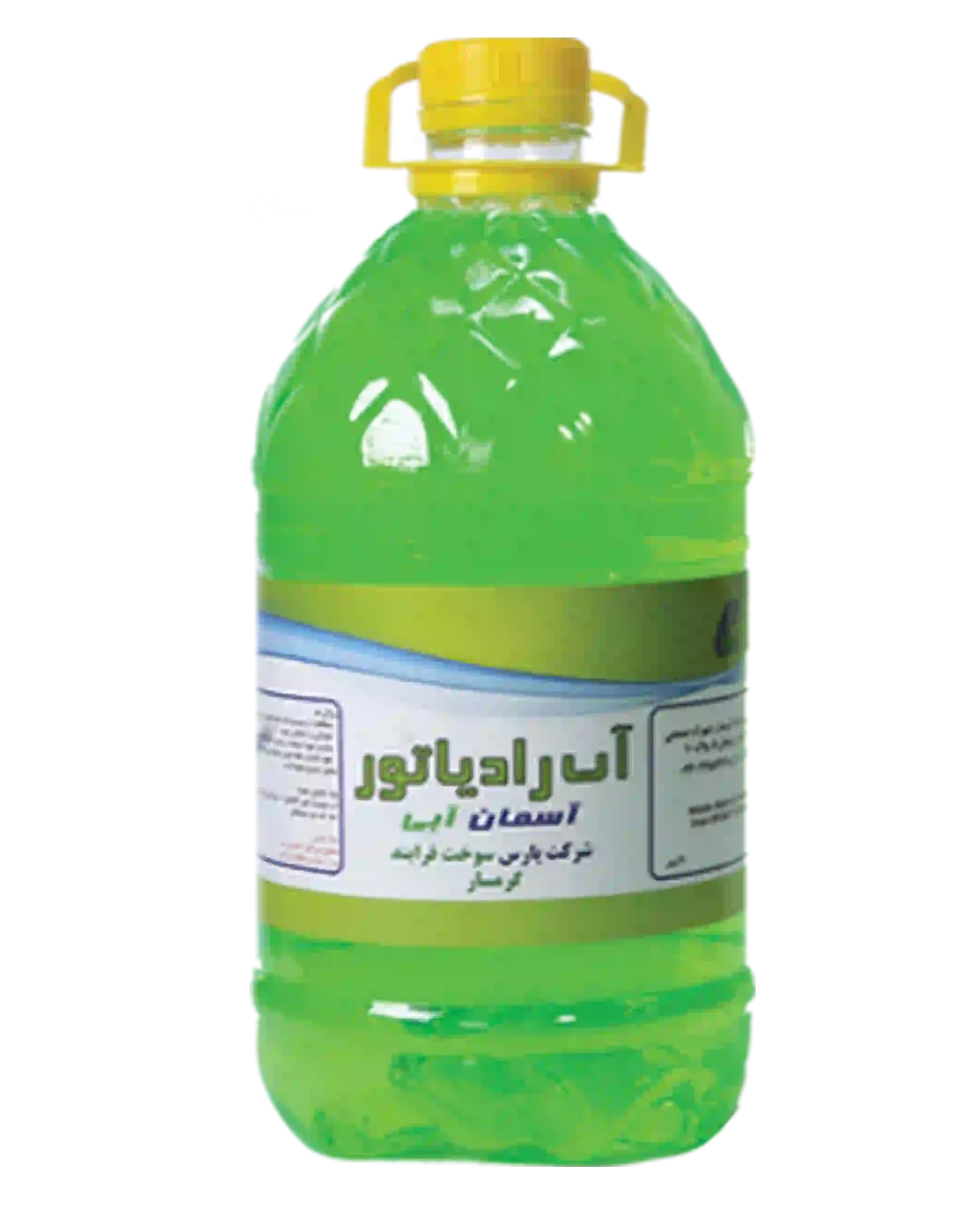
What is car radiator water?

Pars Sokht Farayand Garmsar has developed a radiator fluid with a specialized formula to meet these objectives. The inhibitors used in this product minimize corrosion of cooling system parts and prevent deposit formation on surfaces. This company’s radiator fluid has been tested under the harshest working conditions and is compatible with all types of vehicles.
This fluid does not contain antifreeze and will not prevent freezing.
Please purchase radiator fluid only under the brand “Aseman Abi”.
The Role of Radiator Fluid in the Cooling System
Optimal engine performance largely depends on the health of the cooling system. If the radiator fluid is insufficient or unsuitable, the engine temperature will quickly rise, leading to serious damage to various components such as the cylinder head, head gasket, and pistons.
Composition and Types of Radiator Fluid
Radiator fluid is typically a mixture of distilled water and antifreeze. Antifreeze contains additives that are anti-rust, anti-boil, and anti-freeze. These not only improve cooling performance but also prevent corrosion and deposit formation in the engine’s passages.
Tap Water (Unsuitable)
Not recommended due to harmful salts and minerals.
Ready-to-Use Coolants
Pre-mixed solution for direct use.
Distilled Water + Antifreeze
Recommended mixture by most automakers.
Difference Between Regular Water and Antifreeze
Regular water has a lower boiling and freezing point compared to an antifreeze mixture. Also, due to the presence of mineral salts, it can lead to scale buildup and corrosion of metal parts. Antifreeze not only prevents freezing in cold weather and boiling in hot weather, but it also helps keep components clean and durable.
Signs of Low or Depleted Radiator Fluid
Unusual rise in engine temperature
Engine temperature warning light illuminates
Reduced engine power
Steam observed from the hood
Unusual noises from the engine
Best Time to Check and Replace Radiator Fluid
You should check your radiator fluid level regularly, at least once a month. A complete replacement of the radiator fluid is typically recommended every 2 years or 40,000 kilometers, unless there are specific conditions or frequent leaks.
Step-by-Step Guide to Replacing Radiator Fluid
Ensure the engine is off and cold.
Open the radiator cap and the drain plug.
Completely drain the old coolant.
Flush the system with distilled water if needed.
Close the drain plug and refill with the new water and antifreeze mixture.
Bleed the system by starting the car and leaving the radiator cap open.
Recheck the fluid level after the engine has completely cooled.
Can Tap Water Be Used for the Radiator?
Using tap water is not recommended. The minerals present in tap water can lead to deposit formation, clogging of cooling channels, and corrosion of metal parts. The best choice is distilled water mixed with antifreeze.
Important Tips for Better Radiator Fluid Maintenance
Always use the correct antifreeze mixture.
In cold seasons, adjust the antifreeze properly.
Check the fluid level periodically.
Address any potential leaks promptly.
Bleed the cooling system every so often.